All That Remains

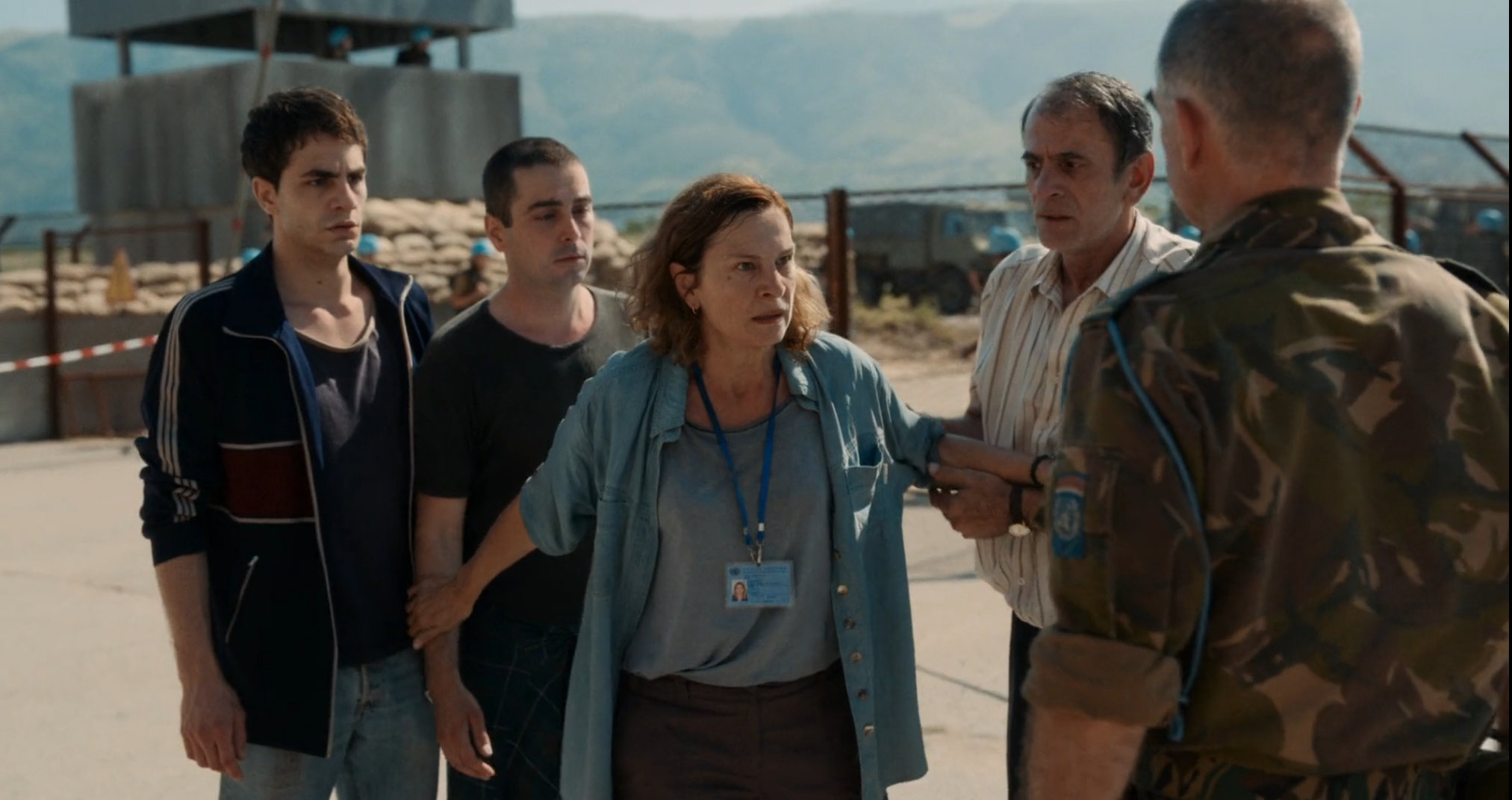
Drago mi je što je filmski projekat “All That Remains” režisera Marka Slavnića dobio preko 26.000 dolara kroz Kickstarter projekat (i ja sam ga financijski podržao). čime će Marko moći dovršiti svoj film All That Remains” (Sve što je ostalo), tj. snimanje scena u Americi, te onda prionuti na postprodukcijski posao. Do sada su snimljene scene u Hrvatskoj i Bosni, što zauzima oko dvije trećine cijelog igranog filma.

Film se radi o dvojici braće, Tariku i Mirzi, koji su došli u SAD sa roditeljima kada su bili dječaci za vrijeme rata. I dok su izbjegli fizičku opasnost, rat je ipak ostavio težak trag na njihovu porodicu, posebno oca. Kao uspješan hirurg u Bosni, otac se nije mogao navići na Ameriku usljed ratnih dešavanja. Njegova destruktivna depresija je ostavila težak teret na porodicu i distancirala ga od njegovog najstarijeg sina, Mirze.

U filmu se također pojavljuje Slavko Štimac. Premijera filma bi trebala biti u avgustu 2013.

Posted in bosanski, film | Tagged , | Leave a comment

Night snack

My wife spoiled me this night. So, ‘a little bit of bread, and a little bit of cheese…’ [French accent]

Posted in food | Leave a comment

Mac & cheese

For the first time in my life I made macaroni & cheese, American style. And I wanted it for so long time – at least since 2003.

Posted in food | Tagged , | 1 Comment

Besim Spahić o Bosancima

Profesor Besim Spahić o lobotomiji bosanskog čovjeka. Poučno, tužno.


Posted in bosanski, bosnia, politics | Tagged | 2 Comments

Nota 7: Isaac u biblioteci

Nije velika tajna da je iznimno teško pronaći radove poznatog i priznatog pisca Isaaca Bashevis Singera, koji je pisao na svome maternjem jidišu. Međutim, jučer je se desio zbir događaja koji su eventualno rezultat onoga što ponekad nazivamo sudbinom.

Amra mi je, dok smo se vozili u autu, zajedno sa objema kćerkicama, predložila da odemo u biblioteku kako bi proveli malo vremena zajedno u nečemu novome, s obzirom da je vrijeme bilo tmurno, kišovito i vrlo vjetrovito. Nije mi se pretjerano išlo, kako zbog razdaljine do biblioteke, tako i zbog ružnog vremena, ali sam se ipak saglasio.

I tako smo mi, cijela mala familija, ušli u gradsku biblioteku. Djevojke su htjele odmah otići u dječije odjeljenje, a meni je pažnju privukla polica sa korištenim knjigama, koje je biblioteka sada prodavala za minornim 10 kruna po komadu.

Gotovo istog trenutka sam primjetio knjigu sa imenom Isaaca Bashevisa, iako nisam odmah mogao vjerovati sopstvenim očima, jer znam koliko je teško kupiti određene radove od ovog istinskog znalca pisane riječi. Brže-bolje sam ugrabio knjigu Satan i Goraj (Satan in Goray) i pregledao je kao da sam u ruci držao Sarajevsku Hagadu. I zaista je bilo sve u redu sa knjigom, nisu nedostajale stranice u njoj, niti su korice bile oštećene. Smiješio sam se i pomislio kakve sam ja to sreće da naletim na knjigu pisca do kojeg sam vrlo teško dosada dolazio, pa da jedan njegov rad ugledam tek tako na polici – i to za bijedni iznos. A onda sam pomislio u kakvom ja to ignorantskom svijetu živim pa da i dobijem mogućnost da ugrabim knjigu velikog znalca, a da to niko prije mene nije uradio. Vjerovatno su svi aktuelni ili nedavni bestseleri davno nestali sa pomenutih polica biblioteke, ali, eto, imao sam sreću da upravo ja ugrabim ne jednu, nego dvije Isaacove knjige.

Međutim, to nije bilo sve. Kada sam pogledao na drugu policu, ugledao sam još jednu knjigu od starog majstora – Metusalems Død (The Death of Metuselah). Sreći nije bilo kraja, što je Amra odmah primjetila čim me je ugledala.

Ponekad se sreća nasmiješi i na one na koje nečesto nabasa. Ali makar mi je drago da me sretne kroz knjigu… ili dv’je.

Posted in bosanski, literature | Tagged | Leave a comment

The Journey Never Ends, part II

Several days ago the UNHCR published my column “The Journey Never Ends, part 1“. Here’s the second part.

THE JOURNEY NEVER ENDS, PART II
From time to time I get asked what I knew about Denmark before coming here. Since I was always very interested in geography I knew that Copenhagen was the nation’s capital and I knew that the peninsula of Jutland links Denmark to the rest of Europe. I knew that the country produced and exported a lot of meat and dairy products and that it did not have many natural resources.

So, what is my story in Denmark? In 1994 I started at Skive Gymnasium. I think it was here I first began to learn about the Danish language, society and culture. Later I started working and I learned even more about Danish values and society. In 2003 I graduated from Nordic Multimedia Academy as a multimedia designer, and since then I have worked as a graphic designer in various companies.

Unlike the natives I do not have a particularly good relationship with Danish food. I think it was in 1998 I got acquainted with Danish roasted potatoes. I was at the company’s Christmas party and I saw these delicious brown potatoes. I ignored almost all the other food and filled my plate with the potatoes. When I tasted it all my senses got a shock and I almost literally ended up on the floor, and it was not because of the beer or the schnapps! It was because I just could not dream potatoes could (or should) be sugary, sweet!

Another Danish food I could not eat for a really long time is rye bread. It was hard, dry and did not taste very good. It may well be that the bread is healthier than ciabatta style bread, but I always felt it tasted like wood. However, one thing I think Danes excel at is pastry, fruit tarts, and marzipan: Othello cake, apple cake (everything with apples) and berry tarts.

Although I now have lived in Denmark for 18 years I have still not got used to the Danish weather. We Danish Bosnians say that “even dogs do not bark in Denmark”, but if something is untamed in this country then it must be the weather. I still have a hard time getting used to rain, wind and sunshine all on the same day. The first two I could easily do without but in a way there is a certain charm (do I really mean this?) about the changing and unpredictable weather.

In Denmark I have lived in refugee centres, in a so-called satellite (a house attached to an asylum centre), a townhouse, a house and a number of flats. I think the process of establishing myself in a new country went rather well. It was not easy, I was a stranger and unfamiliar with the surroundings, but quietly my family and I found our place. It was not always easy to get in contact with the natives. This is especially true in the western Jutland where locals are often very reserved towards people they do not know. My experience is that they open up after they have known you some time. In the beginning I had a hard time understanding their reservation towards foreigners, but I got used to it and eventually I realized that’s a part of their way of life.

Today I have my own family; a wife and two beautiful daughters. I tell them stories about my home country and teach them about Bosnian cultural values, but I also raise them so that they tomorrow can be good and valuable members of the Danish society. I am very proud of my family and I know as long I have them with me everything is going to be fine – that is why I will always fight for democracy and individual freedom in Denmark so that my daughters do not experience what I was forced to in those dark, final years of the twentieth century.

Posted in art, bosanski, bosnia | Tagged , , | Leave a comment

The Journey Never Ends, part 1.

The UNHCR has published my column “The Journey Never Ends, part 1″ a couple days ago”. The link is here.

THE JOURNEY NEVER ENDS, PART 1.

I was a refugee once. From today’s perspective, as the father of two daughters, I am grateful that I was only a seventeen-year-old boy in that time of turmoil, uncertainty and doubts. What I learned back then was that nobody understands a refugee and his situation unless they, too, are one. You can have a deep sympathy and compassion for a person who had to leave his country, but if you have not experienced what it is like to leave your home, your family and dear friends, you can never truly understand what it means to be a refugee, homeless in a foreign land, completely cut off from the rest of the society, at least in those first months of living in exile. And if that person also has children and a wife by their side, you can only imagine but never completely understand what is going on in that person’s mind, what fears for his children’s future a parent is carrying.

When I was asked to write this column and tell my refugee story I was filled with mixed emotions. On the one hand, I was mildly reluctant to the idea of writing about my past experience because I knew I had to dig deep into my memory and consciousness. I believe that is a normal human reaction – usually we tend to ignore and avoid remembering unpleasant events from the past. On the other hand, I wanted to give my refugee story as a tonic to all current refugees who might find in it a crumb of peace of mind, or even be inspired to look more positively upon their situation.

So let us start from the beginning.

I was born into a turbulent world, politically destructive between East and West, the sympathetic freedom-loving psychedelia was on its last legs. The Vietnam War had just entered the dark annals of the twentieth century, American spacecraft Viking 1 landed on Mars, and Czechoslovakia won 5-3 against West Germany in the finals of EURO ‘76. I was born in the small town of Bosanski Šamac in northern Bosnia, which was then part of Yugoslavia. I had a happy childhood, went to kindergarten and primary school, and I had a lot of friends I played with around the apartment complex. The town lies at the point where two great rivers, the Sava and the Bosna (which gave the country its name) meet. In the summer I used to spend a lot of time there with my family and friends. Once a year my parents would take my brother and I to the Adriatic Sea, and we would stay in some of the picturesque small towns of the Makarska Riviera. Yes, life was beautiful.

I almost finished first year of high school when the war scene moved from Croatia and entered my country and hometown in April 1992. One night Serbian forces swiftly occupied Bosanski Šamac and soon I had to flee the town with my parents and brother because the new authorities began imprisoning and mistreating the town’s Croats and Muslims (Bosniaks). Non-Serbs became second class citizens, many of whom were either sent to a nearby labor camp in Zasavica or sent to dig trenches. The only thing missing was a yellow band around their arms; just like the one Jews had to wear in Nazi Germany. And so we fled to the neighboring free town of Gradačac, where we had some relatives who gave us shelter.

Although my hometown was occupied by Serbian forces it was possible to enter and leave the town for a few days at the beginning of the occupation. Since my mother was a store manager she believed naively that she should hand over the keys of the store. The same day that she went to our hometown the new authorities closed down all the roads to and from the town. Therefore my mother could not get out and return to us: her husband and two children – and we were not going to see her or know anything about her situation for the next 7 months.

A few weeks later, Serbian forces began attacking and shelling Gradačac. Those days were probably some of the worst of my life. The small town was bombed to pieces from all possible directions, from earth and air. It was the middle of September when my father was fed up worrying about the lack of security for his boys, that he decided we should try to leave Bosnia. We had to travel south down the entire Bosnia-Herzegovina on an improvised route to Dalmatia and then to Zagreb, Croatia’s capital, where my father’s aunt lived. We traveled through war-torn cities and towns, through forests and mountains and improvised roads and even places where it seemed the war had taken place just minutes ago. I remember at one point driving through a small town where there were many houses on fire, a few crying people in the streets. It felt as if there had been a fight only a few hours before we arrived. We traveled some 1,400 km through the whole country of Bosnia and a large part of Croatia. To illustrate how difficult and dangerous the trip was it usually takes only 230 kilometers to go from Bosanski Šamac to Zagreb!

In December 1992 my father, brother and I were finally reunited with my mother – at the Prague train station. Her journey from our war-stricken hometown to Serbia and on to the Czech Republic deserves a book of its own. A friendly Serb working at the hospital engineered her exit. She had to pretend to be a Serb nurse in her passage from Bosnia and, as she waited for clearance to cross the Drina river, she was given board for a couple of days at the house of an elderly nationalist Serbian woman who was led to believe my mother was a Serb. I can only imagine how it was for my mom to be there during those days listening to hateful speeches from her host, unconscious of the real identity of her guest.

We left the Czech Republic and arrived in Denmark in late April 1993. The first three days we were stationed in the Gentofte asylum center. We then spent one month on the southern island of Langeland. Our language quickly gained a new word, “muving” (eng. moving). People were constantly being relocated to other centers. Where the Danish Red Cross would send you was a big deal. In late May my family got a “muving” to Hagebro in the middle of the Jutland peninsula. It was a former hotel and its long, yellow-brick structure now accommodated around 110 Bosnian refugees. We called our new home Opticon, after the former hotel’s name. The little Bosnian colony had good times together and with the Danish staff from the Red Cross. There were a number of activities for children and adolescents, perhaps to keep our minds from wandering home. I know that many fellow refugee residents look back at those days with a certain nostalgia, because, despite living in small rooms and the adults being tormented of their war-torn home country, there were good things to look back on; people were kind to each other and children played together. One recalls a sense of solidarity: we were all in the same boat. I cannot forget the tremendous efforts of the staff to offer us various activities, taking us on all sorts of trips. I know now that all they wanted was to give us a little break from worrying about families and friends who still were in Bosnia.

To be continued…

Follow Fahrudin Dino Avdibegović and his journey to Denmark in part II, which will be published 17.2.2012.

Posted in bosnia, english, personal | Tagged , , , , | Leave a comment

Vejle -18 C

image

Posted in misc | 2 Comments

U Vejle muzeju

image

Danas u Vejle kunstmuseum-u: Hana, Tarik, Amra i Dino.

Posted in art, bosanski | Leave a comment

Ajan o Marku

Evo kako je to bosanski karikaturista i pisac Midhat Ajanović okarakterisao film “Društvena mreža (The Social Network)“, čija se ocjena i opis filma (pa i razmišljanja o režiseru) u potpunosti podudara sa mojim stajalištem.

U isto vrijeme, dakle početkom ove godine, koju usput budi rečeno ni po čemu dobrom neću pamtiti, uložio sam ogroman napor da do kraja pogledam film „Društvena mreža“. Učinio sam to iz čiste radoznalosti jer je film skoro u svim novinama i filmskim portalima, gdje pišu ljudi dvadesetak godina mlađi od mene, proglašavam “filmom godine” i “sigurnim kandidatom za Oscara”. Osim toga, reditelj Fincher kod mene još ima dosta kredita zbog odličnog film „Sedam“ (1995), iako je nakon toga karijeru nastavio uglavnom podilazeći trendovima. To je učinio i taj put. Film inače govori o nekom mladiću koji je izmislio “Facebook” i postao milijarder. Naravno, riječ je o užasnoj dosadi, barem ljudima moje generacije za koje se jedan film nikako ne može sastojati od sjedenje hakera pred kompjuterom i njihovom beskrajnom brbljanju o blogovima, domenima, web-stranicama, serverima…

Zapravo, kad bolje razmislim, bio bi to dobar i zanimljiv film samo da je recimo snimljen 1980. i da umjesto o sadašnjosti govori o antiutopijskoj budućnosti. Stravična slika svijeta koji će doći ako čovjek moralno ne sazri: prenaseljenim gradovima bazaju bezvoljne, blazirane kreature, čiji su mozgovi oprani medijski raširenom mržnjom i koje po čitav dan bulje u ekrane kompjutera, eventualno se putem raznih “fejsbukova” dogovaraju o parenju sa srodnim kompjuterskim dušama, jer to još uvijek nije moguće izvesti digitalnim putem. U takvom svijetu ljudi su nesposobni da osjete bilo kakvu empatiju i ne zanima ih doslovce ništa.

Cijeli tekst možete pročitati ovdje.

Posted in bosanski | Tagged | Leave a comment

Digtesamling “Pathétique” – gratis download

Det er næsten seks år siden min første digtesamling blev udgivet. I den anledning frigiver jeg den i digital form som gratis download.

Ole Holmstrøm har skrevet om digtesamlingen: “Dinos poesi er ofte refleksioner over kærligheden og mørket, døden og lyset; disse mærkelige konstellationer (konfrontationer) som nogle dage virker så fjerne, men alligevel er en del af menneskets liv. Netop disse temaer dominerer i hans kommende digtsamling “Pathétique”, hvor melankolien afløser glæden, kærligheden kommer efter savn, døden er drømmenes nabo…”

Bogen er delt op i to dele: Laetific, som behandler “lysere” emner som kærlighed, liv og håb; anden del er Miserabilis, som beskæftiger sig med temaer som død, krig, mørke og uro.
Digtene er skrevet i perioden mellem 1997 og 2005 på flere lokaliteter: Danmark, Bosnien, Italien og Kreta. Alle bogens illustrationer er lavet af Elvis Avdibegović.

Fahrudin Dino Avdibegović - Pathetique (poeme)
Downloaded 196 times

28 digte på bosnisk og dansk.
Forlaget Frother, København, 2006.

Denne bog kan købes i papirform hos forlaget og andre danske online boghandlere, men jeg kan især anbefale Lulu.
Jeg har ca. 10-15 stykker tilbage af den oprindelige oplag (med det blå cover). Det danske forlag har lavet bogen i den autentiske “hjemmelavet” stil. Kontakt mig venligst hvis det har interesse.

Posted in literature | Tagged , , | Leave a comment

Pogača

Neki dan sam, uz maminu pomoć, prvi put napravio bosansku pogaču. Evo, kako je to prošlo.

This SimpleViewer gallery requires Macromedia Flash. Please open this post in your browser or get Macromedia Flash here.
This is a WPSimpleViewerGallery

800 ml tečnog jogurta
800 g brašna
malo soli
malo sode (natron)
3 čaj. kašikice sirćeta

Sve sastojke pomiješati i mješati par minuta. Tepsiju premažemo uljem, a onda istresemo tijesto u nju. Pečemo 30 minuta u pećnici na 200 C.

Posted in bosnia, food | Tagged | Leave a comment